8/17/18

The Devil’s Favorite Tool – Discouragement by Ben Fronczek

http://granvillenychurchofchrist.org/?p=935


The Devil’s Favorite Tool – Discouragement

The Devil’s Favorite Tool – Discouragement
To begin with I would like to read you a story from Luke’s Gospel account.
Read Luke 24:13-21a
“Now that same day two of them were going to a village called Emmaus, about seven miles from Jerusalem. 14 They were talking with each other about everything that had happened. 15 As they talked and discussed these things with each other, Jesus himself came up and walked along with them; 16 but they were kept from recognizing him.  17 He asked them, “What are you discussing together as you walk along?”
They stood still, their faces downcast. 18 One of them, named Cleopas, asked him, “Are you only a visitor to Jerusalem and do not know the things that have happened there in these days?”
19 “What things?” he asked.  “About Jesus of Nazareth,”they replied. “He was a prophet,powerful in word and deed before God and all the people. 20 The chief priests and our rulers handed him over to be sentenced to death, and they crucified him; 21 but we had hoped that he was the one who was going to redeem Israel.”
There is nothing so devastating as having lost hope. It seems that these men lost all hope. The one they had hoped to be the redeemer of Israel, was in their minds dead. With the death of Jesus, came the death of their hope.
We have all lost hope in some sense, at some point in our live. Maybe you did not get the job that you wanted. Maybe the bottom fell out of your business, or maybe you lost a good job. Maybe it was because of a health issue and you thought there was no hope for you or a loved one.  Maybe your family gathered around the grave of a child, and through tears you asked, “Why God?”  Maybe your family has been torn apart by strife. Or your children are rebellious. Or, your parents are suffering from a loss of memory. Or things just did not turn out the way you hope they would.
In our midweek Bible study we are looking at the life of Joseph.
I believe the story Joseph was one of the greatest stories recorded in the Bible.  As one reads the story of Joseph, if you did not know the entire story including how it ends, you would probably wonder why God was allowing this young man to suffer through so much unwarranted trouble. First we read about how Joseph was his dad’s favorite son. Even though his family was blessed by God, we also read about how dysfunctional that family was. Jacob’s household was plagued with feelings of jealousy, envy, unwholesome completion, envy and rage. As a young man Joseph was also exposed to deception, polygamy, incest, and murder. Then we read about the poor treatment and hatred his brothers had for him, eventually selling him into slavery. And then he was later falsely accused by Potiphar’s wife who said that he tried to seduce and rape her, and so he ends up in prison.
What probably really confused Joseph was the fact that he knew that he was innocent and didn’t do anything wrong or anything to deserve such treatment. After he correctly interprets the dreams of the Pharaoh’s Cupbearer and Baker, he asks the cupbearer to speak to the Pharaoh on his behalf. But we read that he is left in jail forgotten for another two full years before he is remembered.
Talk about a hopeless situation and a reason to be discouraged, depressed and led to despair. In class we talked about how we would feel if we were in Joseph shoes. And I found the list of emotions similar to what people feel today when we get discouraged and loose hope:  Feeling of resentment, bitterness, hostility, anger, hurt, and discouragement, maybe even some feeling of agitation or revenge.
But the wonderful thing about Joseph in this story is the fact that Joseph doesn’t seem to let these feeling get the best of him.  Even though many could perceive his life as cursed and unfortunate, Joseph remained faithful to God, and to those over him, and to his responsibilities. The author does not record one negative word about Joseph or his conduct even though he suffered one disappointment after another.
We like to come to church here and sing up lifting songs and hear a positive message, but there are times when that is simply not where we are.
Sometimes we just feel down and out, maybe even angry because things are not going the way we hoped. Or maybe we feel guilty because we are not as strong and faithful as Joseph seem to be here. So what are we do?
First of all we need to realize that these feeling are bound to come at different times in our life. If you are human everything is not going to go your way and sometime even the best of us will be disappointed. What matters is how you are going to handle these disappointments, and how you are going let them affect others around you.
Here is an example… Listen to what Paul wrote in 2 Corinthians 1:8-11 “ 8 We do not want you to be uninformed, brothers and sisters,about the troubles we experienced in the province of Asia. We were under great pressure, far beyond our ability to endure, so that we despaired of life itself. 9 Indeed, we felt we had received the sentence of death. But this happened that we might not rely on ourselves but on God, who raises the dead. 10 He has delivered us from such a deadly peril, and He will deliver us again. On Him we have set our hope that He will continue to deliver us,  as you help us by your prayers. Then many will give thanks on our behalf for the gracious favor granted us in answer to the prayers of many.”
To despair is to lose all hope, or to be overcome by a sense of futility or defeat. The Apostle Paul said he despaired of life. It seems like he was just ready give up and die.
But based on this text, he and his companions eventually recognized God’s hand in their situation.
Comfort and peace comes upon the child of God when he or she realizes that God is ultimately in control even in their most disastrous, heart wrenching moments of our life. The Lord, is still Lord even over great personal tragedies, and with Him no situation is ever meant to lead us to despair.
In this text Paul goes on to say that he recognized that some of those disappointing things that happened in his life happened #1 so that he might not rely on or depend on himself, but rather on God, who can raise the dead. Later in 2 Corinthians 12:7-10,  Paul said that he realize it is when things were at their worst and he was the weakest, he was really stronger because it was in those moment of weakness that he would lean on his Lord more than ever.
#2. In the text he also implied that he recognized that God is the one in control and the one that could deliver him, and he recognized He had delivered him over and over again throughout his life and would do it again.
#3. And because of that reality, knowing that God has and would continue to deliver him, Paul said that he learned to set his hopes on Him, no one else.
#4. And because so many prayed for him, many more would give thanks for the answered prayers .
I want to give a few more reasons why I believe we should not lose hope. First is because the WORD OF GOD GIVES HOPE.
Romans 15:4 says; “For everything that was written in the past was written to teach us, so that through the endurance taught in the Scriptures and the encouragement they provide, we might have hope.”
The stories of old are there for us to read and show us that God is in control and works in the lives of mankind. The scriptures are meant to give us hope.
We may think that our problems our unique, that what we are feeling is unique, but God has preserved stories of individuals that experienced trouble, some far worse than ours, & yet survived and grew stronger because of them.
God ministered to them in their situations and there is no reason why we should believe that He isn’t doing the same for us today. The same Lord and God who worked in the lives of the saints of old, is working with us today.
These stories have been preserved for us that we might have hope, and to reassure us that God is still involved in our lives, and that He cares for us.
The stories in the Bible are also meant to give us hope and so too are the promises.  The Bible is just loaded with promises that should give us comfort and hope. I like what it says in Hebrews 13:5, it says  “…For He Himself has said, “I will never leave you nor forsake you.”
Jesus said the same thing in Matthew 28:20 where He said, “And surely I am with you always, to the very end of the age.”
Like a loving parent who watches over their children maybe without them even knowing it, our Lord watches over us. He was with Joseph in prison. He was with David when Saul wanted to kill him. He was with Daniel in the lion’s den. He was with Shadrach, Meshach and Abednego in the fiery furnace.
No matter what our situation, it is important for us to remember God’s word; not only the promises He made, but also the stories of how He took care of His own over and over and over again. If you focus more on God’s word and what He has preserved for us and less on your disappointments, it should help you in those times of despair and help you become hopeful again.
The second reason for hope is the Cross of Jesus Christ. If the cross communicates any message, it most definitely should remind you how much God loves you and me. Do you actually think that God would send His son into the world and allow Him to suffer the humiliation and pain He suffered, or do you think He would allow His son to be nailed to a wooden crossbeam to save us from our sins if He did not have an incredible amount of love for us?
You may be sad, and you may not understand why you did not get that job,  or why a family member died in an accident, you may not understand why things don’t go the way you planed.  But if you want to feel better you need to believe that God is ultimately in control and will work all things out for your good and He’ll do that because He really, really loves you.
It’s crucial and imperative for us to know and believe that He may be protecting us from something, or He may have something else better in mind, or what we want is not in our best interest, or what you may want may upset a whole chain of events that only He can see.
If you remember His deep love for you and me, it will help you in those difficult times of despair and it will help re-ignite feeling of hope again.
Before I end this lesson I like to share a story with you I read this past week about a yard sale that the devil conducted. It goes like this:
The devil was holding a yard sale one day and displayed his most useful tools, marked at different prices, on a table.
Lying side by side were some of his most notable implements of destruction: hatred, envy, jealously, deceit, lust, lying and pride- all on sale. But over to the side of the yard on display was a worn-out tool that cost more than all the others combined. The tool was labeled DISCOURAGEMENT.
When asked why it was more expensive than the other tools, the devil responded, “It’s more useful to me than any of the others. When I can’t bring down my victims with the rest of my tools, I use discouragement, because so few people realize it belongs to me.” Nothing paralyzes us, nothing stops us in our tracks like discouragement and its partner in crime, hopelessness.
Discouragement and hopelessness are no respecters of persons. They keep the unemployed, unemployed. The homeless, homeless. The sick, sick. They can even draw the most powerful ministry to its knees. When you’re overcome with discouragement and hopelessness, you can’t pray, you can’t worship and you become a victim of your environment. Discouragement and hopelessness drain you of courage, vision, faith, expectation and the will to make a difference in the kingdom of God . If the devil can get you discouraged and hopeless, then he has successfully neutralized you. You are left with only enough energy to feel sorry for yourself.
Conclusion: Are you tired of being discouraged? You don’t have to stay that way. Whether or not the situation changes, you can experience joy, peace, and contentment.
For the believer, circumstances don’t have to dictate emotions.
Allow Scripture and God’s love for you to permeate your mind and heart. Don’t dwell on the disappointment, rather keep busy, lean upon the Lord and His promises and discouragement will lose its foothold, and you will eventually become joyous and fruitful, and hopeful again.
To read more Sermons click on the following link: http://granvillenychurchofchrist.org/?page_id=566

Jesus is the Way, Truth, & Life by Alfred Shannon Jr.

https://biblicalproof.wordpress.com/2011/05/page/1/


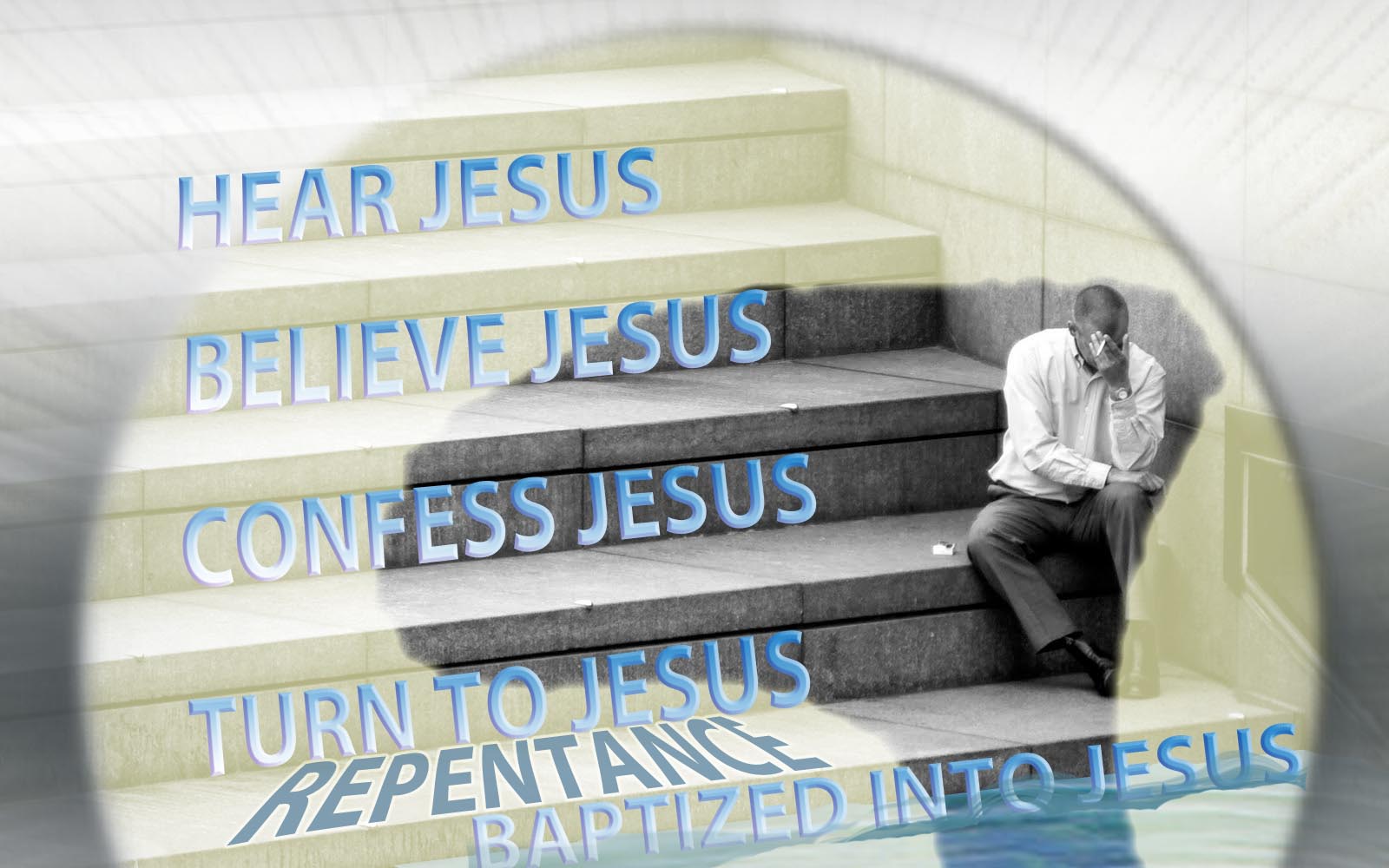
Hear
 Jesus.
Believe Jesus.
Confess Jesus.
Turn to Jesus.
Baptized into Jesus.
Walk With Jesus.
Live with Jesus.
Jesus is the Way, Jesus is the Truth, and Jesus is the Life.
1 Cor 15:1-4; Rom 10:17; Rom 10:10; Gal 3:27; Rom 6:4; Rev 2:10; 1 Pet 2:21; Rom 6:8; Jn 14:6

JOHN by Paul Southern

http://www.oldpaths.com/Archive/Southern/Paul/1901/john.html

JOHN

  1. THE TITLE
  2. The fourth gospel is named for its writer, John, which means "Grace of God," or "God's gift." John, the same as Johanan, is a contraction of Jehohanan.
  3. THE WRITER
  4. From internal and external evidences we learn the following things about the writer:
    1. He was a son of Zebedee and Salome, and brother of James (Mk 3:17).
    2. It is thought that John's mother was s sister of the Lord's mother (Mk 15:40,41; Mt 27:56; Jn 19:25-27). If so, he was a cousin to Jesus.
    3. He was probably born in Bethsaida, and was a fisherman (Mt 4:21).
    4. He was probably one of the two whom John the Baptist turned to the Lord (Jn 1:40).
    5. Knowledge of Jewish customs indicates that he was a Jew.
    6. He was one of the twelve apostles (Mk 3:14-19).
    7. He was an eye-witness of what he wrote, having accompanied Jesus during the Lord's ministry (Jn 1:14; 1 Jn 1:1-4).
    8. He was one of the three most intimate with Jesus (Mt 17:1; 26:37).
    9. He is the writer of First, Second and Third John, and Revelation.
    10. Scriptural references show that he was present at the ascension (Acts 1:13); on Pentecost (Acts 1:26; 2:1); with Peter in prison (Acts 3). He protested against the Sanhedrin (Acts 4:13), and remained at Jerusalem during the great persecution (Acts 8:1). Fifteen years after Paul's first visit he was still in Jerusalem (Acts 15:6). The subsequent story of his life is largely traditional. It is thought that he moved to Ephesus, and from there was banished under Domitian's persecution to the island of Patmos where he was forced to work in mines. On Patmos he received the visions of The Revelation (Revelation 1:9). Tradition says he later returned to Ephesus and died around 95 A.D. The New Testament makes no mention of this.

  5. THE GOSPEL

    1. The date: Perhaps between A.D. 85 and 95, though dates suggested by men range from 68 to 96.
    2. Place of writing: It was probably written in Ephesus.
    3. Circumstances prevailing: The gospel had been preached in all the Roman Empire, Jerusalem had fallen, Christianity had been sorely persecuted, and most of the New Testament had already been written.
    4. Ones addressed: Christians of all nationalities are in mind.
    5. Style: Simplicity, sameness, repetition, parallelism, contrasts.
    6. Subject: Jesus, the Divine Christ, the Son of God.
    7. Purpose: To cultivate and cherish the spiritual life of Christians.
    8. Characteristics (Tidwell, The Bible Book by Book):
      1. It is the gospel for the church.
      2. It is the spiritual gospel
      3. It is a gospel of feasts, which furnish material for much of Christ's teaching.
      4. It is a gospel of testimony, proving Jesus is Christ.
      5. It is a gospel of belief (See John 20:30-31).
      6. It is a gospel of symbols. Mystic numbers (3,7) and many symbols are used.
      7. It is a gospel of the Incarnation. "The word became flesh," etc. (1:14).

  6. EXERCISES FOR STUDENT ACTIVITY

    1. Notable omissions: Baptism, temptation, transfiguration, instituting of the Lord's Supper, agony in Gethsemane, and parables of Christ. Why are these great events not given in the Gospel According to John?
    2. In the light of the Gospel According to John explain:
      1. The causes of unbelief.
      2. The results of unbelief.
    3. Study the night scenes of the book.
    4. Study the "I Am's" of Christ recorded by John.
    5. Note in detail the special discourses of Jesus that are found in the book.
    6. Make a list of the ones who came to worship Jesus.
    7. Discuss the following viewpoints of the gospel writers:
      1. Matthew explains the messianic functions of Christ.
      2. Mark presents the active work of Jesus.
      3. Luke describes the character of Christ as the Savior.
      4. John magnifies the person of the Lord.

Published in The Old Paths Archive
(http://www.oldpaths.com)

This little light by Gary Rose


This picture reminded me of a National Geographic episode about Mexico’s cave systems that I saw on public television last week. Caves can be remarkably wonderful and visually stunning places, but they can replete with all sorts of dangers. I imagine that most of us will recall the rescue of some children (about a dozen or so) from a Vietnamese cave. Truth is- they could just as easily perished as being rescued.

This picture is extraordinarily beautiful! The colors are stunning, but stands out to me most is that man in the center of it. Look at that almost blinding white light he is carrying!! Without that light, there would be nothing but darkness; darkness so intense that you couldn’t see your hand, even if it was right in front of your face!!!

After thinking about it awhile, we all carry a light. Its something within us, something that enlightens the world and changes all those who we come into contact with.

Jesus says this about all who would be his disciples…


Matthew 7 (World English Bible)
14  You are the light of the world. A city located on a hill can’t be hidden.   15  Neither do you light a lamp, and put it under a measuring basket, but on a stand; and it shines to all who are in the house.   16  Even so, let your light shine before men; that they may see your good works, and glorify your Father who is in heaven. 


Jesus is teaching that we should share the most beautiful light of all- The One and Only Truth that comes from God with everyone. And the brighter that inner light shines within us, the more people will come to know the God of all the universe. So, shine and grow ever brighter, for the world needs what you have! All this makes me remember Frank Coletta leading the young children at the Clifton Park church of Christ in the song: This little light, I’m gonna let it shine, let it shine, let it shine!! Great song, Great advise! Go do it!!!

8/15/18

"THE FIRST EPISTLE TO TIMOTHY" The Christian's Diet (4:3-5)


"THE FIRST EPISTLE TO TIMOTHY"

The Christian's Diet (4:3-5)


INTRODUCTION

1. A feature common to many religions are their dietary restrictions...
   a. Some are known for their vegetarianism (e.g., Hinduism)
   b. Others for their restrictions against certain meats, such as pork
      (e.g., Islam, Judaism)

2. In warning against apostasy, the apostle Paul...
   a. Foretold the rise of doctrines restricting certain foods - 1Ti 4:
      1-3
   b. Described the general principles related to the Christian's diet- 1Ti 4:3-5

3. The general principles of "The Christian's Diet" can be stated in
   this way...
   a. All creatures are good (for food) if received with thanksgiving
   b. All foods are "sanctified" by the Word of God and prayer

[The word "sanctified" means to be "set apart, holy".  In what way has
God sanctified all foods, and are there any exceptions to the rule?
First we note that all foods have been...]

I. SANCTIFIED BY THE WORD OF GOD

   A. FOODS DECLARED CLEAN...
      1. By God
         a. At the Creation, God gave His approval to seed-bearing herbs
            and trees - Gen 1:29
         b. After the flood, moving things were approved as food, with
            one restriction - Gen 9:3-4
         c. During the Mosaic period, dietary restrictions were placed
            on Israel - cf. Deut 14:4-21
      2. By Jesus
         a. Jesus kept the Law of Moses while it was still in effect
            - cf. Mt 5:17-19
         b. But His teachings often looked forward to when the Law would
            cease - Mk 7:18-19
      3. By Paul
         a. Paul's views came from the Lord Jesus Himself - Ro 14:14
         b. Thus Christians were free to eat whatever was sold in the
            meat market - 1Co 10:25
      -- The Word of God has thus declared all foods clean; this is the
         general rule

   B. EXCEPTIONS TO THE RULE...
      1. Meat sacrificed to idols
         a. Christians were forbidden to eat meat when it was part of
            idol worship, for that would entail fellowship with demons
            - Re 2:14,20; cf. 1Co 10:18-22
         b. But not if sold in the market place and connection to the
            idol lost - cf. 1Co 10:25-28
      2. Blood and things strangled
         a. Gentile Christians were not to eat blood and things
            strangled - Ac 15:20,29; 21:25
         b. The context suggests this may have been out of consideration
            for the sensitivities of the Jewish Christians - Ac 15:21;
            yet cf. Gen 9:4
      3. When eaten with offense (e.g., doubt)
         a. To those who consider something unclean, it is unclean - Ro 14:14
         b. It would be evil to eat that which one thinks is unclean
            - Ro 14:20
         c. Unless one can eat without doubt, it is sinful - Ro 14:23
      4. When eaten to cause offense (i.e., stumbling)
         a. If our brother is grieved or destroyed by our food, it is
            wrong - Ro 14:15-16
         b. It is good to abstain rather than cause a weak brother to
            stumble - Ro 14:20-21; 1Co 8:12-13
         c. Our goal is to glorify God, and cause no offense to man
            - 1Co 10:31-32
      -- All things are lawful, but not all things edify and are
         helpful; we must remember this in regards to our diet - cf.
         1Co 10:23-24

[Thus every creature (i.e., all foods) has been sanctified by the Word
of God; i.e., declared clean.  But we should also stress that which is
emphasized by Paul in our text, that the food we eat is also...]

II. SANCTIFIED BY PRAYER

   A. RECEIVED WITH THANKSGIVING...
      1. Stressed twice in our text
         a. Foods were created by God to be received with thanksgiving
            - 1Ti 4:3
         b. Nothing is to be refused if received with thanksgiving
            - 1Ti 4:4
      2. We should be thankful for everything
         a. We should possess an attitude of gratitude - Ep 5:20; Co
            3:17; 1Th 5:18
         b. Certainly for our daily bread, for which we are to pray!
            - cf. Mt 6:11
      -- When received with thanksgiving offered in prayer, food is
         sanctified

   B. EXAMPLES OF THE RULE...
      1. Jesus offering thanks
         a. When feeding the 4000 - Mt 15:36-38
         b. When observing the Last Passover - Lk 22:15-20
      2. Paul offering thanks
         a. On the ship to Rome - Ac 27:35
         b. A practice alluded to in his writings - Ro 14:6; 1Co 10:30
      -- Paul sought to imitate the Lord, certainly we should imitate
         them both! - 1Co 11:1

CONCLUSION

1. When it comes to "The Christian's Diet", all foods are sanctified
   by...
   a. The word of God
   b. The prayer of the Christian

2. The exception to the rule is when...
   a. Fellowship with idols and demons is indicated
   b. Fellowship with brethren is threatened

Have you given thought to how the food you eat affects your fellowship
with God and others...?

Executable Outlines, Copyright © Mark A. Copeland, 2016

eXTReMe Tracker 

Hermeneutical Principles in the Old Testament by Dave Miller, Ph.D.

http://apologeticspress.org/APContent.aspx?category=11&article=967


Hermeneutical Principles in the Old Testament

by Dave Miller, Ph.D.


One of the attributes of God is His rational nature. God is inherently logical, rational, and reasonable. He is a God of truth. He created humans in His own image, which includes this same rational nature. The human mind was created by God to function rationally. God’s communication to humanity presupposes this feature. The Bible was written in human language, and it was written in such a way that it assumes that its intended meanings may be understood correctly. In fact, within the Bible itself, beginning in the Old Testament, are found the hermeneutical principles by which the reader may understand the intended meanings.
This article summarizes six key principles apparent in the Old Testament that are indispensable to correct hermeneutical procedure. Many Bible passages demand that the reader of the Bible apply simple-but-necessary principles of interpretation in order to arrive at the meaning God intended.
PRINCIPLE 1: ABSOLUTE TRUTH IS ATTAINABLE
Absolute, objective truth exists and can be known. The human mind can come to knowledge of that truth. Many theologians today are maintaining that truth is subjective and relative. The “new hermeneutic” people claim that a circle is set up between interpreter and text, each interpreting the other in an ongoing process, with the interpreter’s presuppositions determining the meanings the interpreter draws from the text. But, as usual, man’s complex theories are ridiculous in view of the simple, straightforward statements of Scripture. The Old Testament everywhere assumes that humans can and must come to the knowledge of absolute truth.
Solomon said to “buy the truth, and do not sell it, also wisdom and instruction and understanding” (Proverbs 23:23, NKJV). Both Isaiah and Jeremiah affirmed that people can, and must, be taught in order to come to knowledge of those things that must be known (Isaiah 54:13; Jeremiah 31:34; cf. John 6:45; 7:17). Moses already had stressed to the Israelites that it would be absolutely imperative for them to teach their children those things that would be necessary to please God (Deuteronomy 6:1-9). Were the children capable of comprehending and coming to knowledge? Moses also explained that the purpose of the desert hardships was to make the Israelites “know that man shall not live by bread alone; but man lives by every word that proceeds from the mouth of the Lord” (Deuteronomy 8:3). If all of life is to be governed by the words that proceed from God, humans are capable of assimilating those words and coming to a correct understanding of what is required of them.
Moses further pointed out that “the secret things belong to the Lord our God, but those things which are revealed belong to us and to our children forever, that we may do all the words of this law” (Deuteronomy 29:29). Certainly, there are many things that humans cannot know—things far beyond our limited capability to understand (Romans 11:33). However, God has revealed certain truths that we are well capable of grasping, and that God expects us to comprehend. These truths “belong” to us, i.e., they are directed to us, and we will be held accountable for our reaction to them. Far too many people dwell on peripheral matters that cannot be fully known, while they neglect those things for which they will be held responsible in eternity. No wonder God frequently issued warnings against being ignorant, uninformed, or resistant to knowing (Isaiah 1:3; 5:13; Jeremiah 9:6; Hosea 4:6).
Solomon observed that the words of God’s wisdom “are all plain to him who understands, and right to those who find knowledge” (Proverbs 8:9). His wisdom claims that “those who seek me diligently will find me” (Proverbs 8:17). Could Adam and Eve know whether it was permissible for them to consume the fruit (Genesis 3:1-3)? Could Cain know what sacrifice God expected (Genesis 4:5)? Could Moses know whether he should speak to or strike the rock (Numbers 20:8-11)? These instances demonstrate that the perennial problem with humanity is not the ability to come to knowledge of God’s Word; rather, the consistent problem is the will and the desire to conform. Many other passages leave no doubt that God has a body of truth that He has made available to mankind, and He expects every person to use mental faculties and cognitive powers to understand that truth.
PRINCIPLE 2: LOGICAL REASONING IS REQUIRED
The Old Testament also conveys the idea that in order to arrive at God’s truth, correct reasoning must be employed. Isaiah quoted God’s statement to the nation: “Come now, and let us reason together” (1:18). God later said: “Put Me in remembrance; let us contend together; state your case, that you may be acquitted” (43:26). In his farewell address to the nation, Samuel declared: “Now therefore, stand still, that I may reason with you before the Lord” (1 Samuel 12:7). Solomon insisted that “[t]he first one to plead his cause seems right, until his neighbor comes and examines him” (Proverbs 18:17). He also said, “the simple believes every word, but the prudent man considers well his steps” (Proverbs 14:15). This investigative, cautious, perceptive spirit necessitates an analytical approach to life. We must use our God-given rationality to think clearly, accurately, and logically in our treatment of Scripture, as well as in sorting out the daily affairs of life. These passages teach that we both can, and must, ascertain the correct meaning of Scripture through the proper exercise of our reasoning powers.
PRINCIPLE 3: DILIGENT EFFORT MUST BE EXPENDED
The task of learning what God wants us to know requires considerable effort. We must be willing to expend the time and trouble to carefully, prayerfully, and diligently analyze and examine God’s words. Moses underscored this principle in his remarks to the Israelites on the plains of Moab just prior to their entrance into the Land of Canaan. He described the task as requiring constant, consistent attention:
And these words which I command you today shall be in your heart; you shall teach them diligently to your children, and shall talk of them when you sit in your house, when you walk by the way, when you lie down, and when you rise up. You shall bind them as a sign on your hand, and they shall be as frontlets between your eyes. You shall write them on the doorposts of your house and on your gates (Deuteronomy 6:6-9).
Solomon referred to the attentiveness required to remain true to God: “My son, keep your father's command, and do not forsake the law of your mother. Bind them continually upon your heart; tie them around your neck. When you roam, they will lead you; when you sleep, they will keep you; and when you awake, they will speak with you” (Proverbs 6:20-22). This attentiveness must include an intense desire to pursue, know, and acquire truth—like the psalmist who wanted God’s laws so badly that he could almost taste them (Psalm 19:10). It was to be sought after more than fine gold (Psalm 19:10; 119:127). Most are simply too busy, or unwilling, to expend effort to such an intensity. Life has too many distractions, and offers too many other interests. But the Bible makes clear that if we wish to understand God’s will for our lives, arduous, persistent, aggressive effort is essential to ascertain that will.
PRINCIPLE 4: BE AWARE OF FALSE INTERPRETATION
A fourth hermeneutical principle found in the Bible is that we must recognize that there are incorrect interpretations and that we are capable of distinguishing the correct from the incorrect. False teachers actually do exist who misrepresent God’s Word and deceive people with incorrect interpretations. God, through Jeremiah, warned the nation: “Do not listen to the words of the prophets who prophesy to you. They make you worthless; they speak a vision of their own heart, not from the mouth of the Lord” (Jeremiah 23:16). Think of the many con men and shysters throughout Bible history who sought to lead God’s people astray—from Pharaoh’s magicians (Exodus 7:11; 2 Timothy 3:8) and Ahab and Jezebel’s prophets of Baal (1 Kings 18:19), to Zedekiah (1 Kings 22:11,24) and Hananiah (Jeremiah 28). God expected people to see through their charades and their erroneous ideologies, and to recognize the pure Word of God.
So it is clear that the Old Testament warns of false interpretations and misrepresentations of God’s Word. In God’s sight, there is only the truth on the one hand, and various departures from that truth on the other hand. All people are required to distinguish between truth and error, and to cling to the truth. “To the law and to the testimony! If they do not speak according to this word, it is because there is no light in them” (Isaiah 8:20).
PRINCIPLE 5: REMAIN WITHIN SCRIPTURAL PARAMETERS
The Bible also teaches that the interpreter must remain within the framework of Scripture, neither adding to nor subtracting from the written revelation. Moses declared in the long ago: “You shall not add to the word which I command you, neither shall you diminish ought from it, that you may keep the commandments of the Lord your God which I command you” (Deuteronomy 4:2; 12:32). Solomon said: “Every word of God is pure...add not to His words, least He reprove you, and you be found a liar” (Proverbs 30:5-6). Jeremiah urged: “Stand in the ways and see, and ask for the old paths, where the good way is, and walk in it” (Jeremiah 6:16). In other words, the individual is responsible for identifying the limits of God’s directives, and then confining himself to those directives. These passages make clear that God has defined the parameters of moral, spiritual, and religious truth for humanity. He expects us to confine ourselves to His instructions in our thinking and practice.
The Old Testament is riddled with instances of people failing to conform themselves precisely to the instructions given to them by God. Cain was neither an atheist nor a reprobate. He, in fact, was a religious individual who was willing to engage in religious worship. He was also to be commended for directing his worship behavior toward the right God. Nevertheless, his slight adjustment in the specifics of worship action evoked God’s displeasure (Genesis 4:5; 1 John 3:12). Nadab and Abihu were the right boys, at the right time, at the right place, with the right censers, and the right incense. Yet by using the wrong fire, they were summarily executed by God (Leviticus 10:1-2). King Saul was censured twice for his unauthorized actions (1 Samuel 13:11-13; 15:19-24). Uzzah was struck dead simply for touching the Ark of the Covenant, though his apparent motive was to protect the Ark (2 Samuel 6:7). David later identified the problem as “because we did not consult Him about the proper order” (1 Chronicles 15:13). God’s previous instructions on the matter were not followed as they should have been.
Remaining within the framework of Scripture requires a proper recognition of the role of the “silence” of the Scriptures. A misunderstanding occurs in two ways: (1) some reason that if the Bible is silent concerning a particular practice (and therefore does not explicitly condemn it), they are free to engage in that practice; (2) others reason that if the Bible does not mention a practice, then they are not free to engage in that practice. But neither of these viewpoints accounts adequately for the biblical picture.
The Bible may not expressly mention a given item, and yet authorize its use. For example, Noah was told to construct a boat, without being given all of the details about how to do so (Genesis 6:14). He was authorized to achieve the task using a variety of carpentry tools. God’s silence on this particular point therefore was permissive. On the other hand, God did not explicitly forbid using poplar, cedar, or ash. Rather, He specified “gopherwood.” God’s silence was therefore restrictive in this case.
Two further examples illustrate this principle. God did not explicitly forbid Nadab and Abihu from using fire from some other source than the one divinely specified. He simply told them what fire they were to use. Use of fire from any other source was an unauthorized act, i.e., it had not received God’s prior approval. The text says that they “offered profane fire before the Lord, which He had not commanded them” (Leviticus 10:1). It was not that God had told them not to do so; it was that He had not told them to do it.
In like manner, when Joshua received instructions from God regarding the proper tactics to be used in conquering the city of Jericho, God spoke in a positive fashion, specifying what they were to do. He did not tell them what they were not to do. The instructions included the act of shouting when the trumpet was sounded (Joshua 6:3-5). However, Joshua—who obviously understood the principle of remaining within the confines of God’s instructions, and grasped the hermeneutical concept of restrictive silence—relayed God’s instructions to the nation by offering further clarification: “Now Joshua had commanded the people, saying, “You shall not shout or make any noise with your voice, nor shall a word proceed out of your mouth, until the day I say to you, ‘Shout!’ Then you shall shout” (Joshua 6:10-11). Joshua understood that things could be forbidden by God—not because He explicitly forbade them—but because He simply gave no authority to do them. With diligent and honest study, we, too, can settle every question of interpretation and authority.
PRINCIPLE 6: MAINTAIN A RECEPTIVE ATTITUDE
That brings us to a sixth principle for understanding the Bible. We must have the right mindset, the right attitude, a genuine desire to know the will of God, and an honest heart to accept the truth, no matter how difficult the demands of that truth might be. Solomon noted that “a wise man will hear and increase learning, and a man of understanding will attain wise counsel” (Proverbs 1:5). “Give instruction to a wise man, and he will be still wiser; teach a just man, and he will increase in learning” (Proverbs 9:9). These passages make clear that we cannot go to Scripture with the ulterior motive of getting our way or proving our position. We must be eager to learn from Scripture what the Lord intended for us to learn. We must not be like Jeremiah’s contemporaries who defiantly asserted: “We will not walk therein” and “We will not listen” (6:16-17).
This extremely brief discussion of hermeneutical principles that are evident in the Old Testament is certainly not intended to be complete. But it shows how the Old Testament contains within itself principles by which its truth may be extracted. All accountable humans have it within their power to transcend their prejudices and presuppositions sufficiently to arrive at God’s truth—if they genuinely wish to do so. There is simply no such thing as “my interpretation” and “your interpretation.” There is only God’s interpretation and God’s meaning—and with diligent, rational study, we can arrive at the truth on any subject that is vital to our spiritual well-being.
Rather than shrug off the conflicting views and positions on various subjects (like baptism, music in worship, miracles, how many churches may exist with God’s approval, etc.), and rather than dismiss religious differences as hopeless, irresolvable, and irrelevant, we must be about the business of studying and searching God’s Book, cautiously refraining from misinterpreting and misusing Scripture. If we will give diligent and careful attention to the task with an honest heart that is receptive to the truth, we can be certain of our ability to come to the knowledge of God’s will. The Old Testament is an appropriate place to commence this quest.

Here I Raise My Ebenezer! by Kyle Butt, M.Div.

http://apologeticspress.org/APContent.aspx?category=11&article=909

Here I Raise My Ebenezer!

by Kyle Butt, M.Div.


Many of us have grown up going to worship services where we sang age-old songs that were brought down to us from many years ago. In those songs, we often sing words or phrases that might not retain a popularly understood sentiment. Yet, even though we might not understand what we are singing, that has not stopped many of us from following the song leader through misunderstood stanzas of our old favorites.
One of the phrases that is of particular interest comes from the song O, Thou Fount of Every Blessing. The lyrics of this song (which originally was titled Come, Thou Fount of Every Blessing) were written by Robert Robinson in 1758. The second verse of the song begins with these words: “Here I raise my Ebenezer.” If you are like many who have sung this song, the word “Ebenezer” immediately brings to your mind visions of old Ebenezer Scrooge from Dickens’ Christmas Carol, screaming at Bob Cratchet to conserve coal and get to work. Yet, we all know that is not the idea behind this song. Where, then, does the term Ebenezer originate, and what does it mean?
In 1 Samuel 7, the prophet Samuel and the Israelites found themselves under attack by the Philistines. Fearing for their lives, the Israelites begged Samuel to pray for them in their impending battle against the Philistines. Samuel offered a sacrifice to God and prayed for His protection. God listened to Samuel, causing the Philistines to lose the battle and retreat back to their own territory. After the Israelite victory, the Bible records: “Then Samuel took a stone and set it up between Mizpah and Shen, and called its name Ebenezer, saying, ‘Thus far the Lord has helped us’ ” (1 Samuel 7:12).
The word Ebenezer comes from the Hebrew words ’Eben hà-ezer (eh’-ben haw-e’-zer), which simply mean “stone of help” (see Enhanced…, 1995). When Robinson wrote his lyrics, he followed the word Ebenezer with the phrase, “Here by Thy great help I’ve come.” An Ebenezer, then, is simply a monumental stone set up to signify the great help that God granted the one raising the stone. In Robinson’s poem, it figuratively meant that the writer—and all who subsequently sing the song—acknowledge God’s bountiful blessings and help in their lives.
The next time you sing about raising your Ebenezer, you will be able to “sing with the understanding” that you are acknowledging God’s help in your life (1 Corinthians 14:15).

REFERENCES

Enhanced Strong’s Lexicon (1995), (Oak Harbor, WA: Logos Research Systems, Inc.).