10/22/18

"He Who Has an Ear" by Trevor Bowen

http://insearchoftruth.org/articles/he_who_has_an_ear.html

"He Who Has an Ear"

We depend on God resisting us in our sin. If we stubbornly refuse His will, we expect Him to resist us, maybe even thwart our efforts. We expect Him to struggle with us, so that we might find it difficult, which might cause us to pause and consider (Acts 26:14). It can be surprising, even frightening to learn that God sometimes steps out of our way and lets us hear whatever we want to hear. Please consider the prophet Micaiah's initial response to King Ahab's inquiry:
Then he came to the king; and the king said to him, "Micaiah, shall we go to war against Ramoth Gilead, or shall we refrain?" And he answered him, "Go and prosper, for the LORD will deliver it into the hand of the king!" (I Kings 22:15)
Now, it is not unusual for a prophet of the Lord to pronounce the Lord’s blessing upon a king's efforts; however, it is unusual that a prophet would encourage a king into the very effort that would destroy him! When King Ahab heard this, on the day before his death in battle, he knew that Micaiah was not speaking truth.
So the king said to him, "How many times shall I make you swear that you tell me nothing but the truth in the name of the LORD?" Then he said, "I saw all Israel scattered on the mountains, as sheep that have no shepherd. And the LORD said, 'These have no master. Let each return to his house in peace.' "And the king of Israel said to Jehoshaphat, "Did I not tell you he would not prophesy good concerning me, but evil?" (I Kings 22:16-18)
Why did Micaiah initially conceal the truth? The king immediately knew it was not true (I Kings 22:16). Why did Micaiah lie? Sometimes, more is communicated than which words alone convey.
Prior to this declaration, King Ahab and King Jehoshaphat had met to discuss battle against Syria. Although Ahab was inclined to rush to war, Jehoshaphat requested, "Please inquire for the word of the LORD today"(I Kings 22:5). Ahab gathered all of his 400 false prophets together, who unanimously, but falsely foretold the victory of Ahab. Although the sayings pleased Ahab, Jehoshaphat was not convinced:
And Jehoshaphat said, "Is there not still a prophet of the LORD here, that we may inquire of Him?" So the king of Israel said to Jehoshaphat, "There is still one man, Micaiah the son of Imlah, by whom we may inquire of the LORD; but I hate him, because he does not prophesy good concerning me, but evil." And Jehoshaphat said, "Let not the king say such things!" (I Kings 22:7-8)
Surely Micaiah knew these events, being a prophet and knowledgeable of Ahab's customs (I Kings 22:16). However, the king's messenger still ensured that Micaiah was adequately "prepped" to speak appropriate words:
Then the messenger who had gone to call Micaiah spoke to him, saying, "Now listen, the words of the prophets with one accord encourage the king. Please, let your word be like the word of one of them, and speak encouragement." And Micaiah said, "As the LORD lives, whatever the LORD says to me, that I will speak." (I Kings 22:13-14)
It is hard to imagine that scene, which occurred long ago: All day the kings heard false prophecies, encouraging them to war. Everybody knew they were phony. The kings knew. The prophets knew. Finally, the true and faithful prophet, who had been avoided, was brought before the kings, but not without first being warned. Ahab, who so eagerly desired news of prosperity, but expected words of judgment, must have felt the thunder-clap of doom in Micaiah's voice, rife with empty hope. Ahab's reaction only confirmed what everybody knew to be true: Except Jehoshaphat, no one really cared what the Lord had to say.
Do we have any "Ahab's" among us today? Has that spirit found a place in our hearts? During the days of Ezekiel, God warned the prophet that people only listened to him because they liked the sound of his voice (Ezekiel 33:30-32). They had no interest in obeying God’s will. Paul warned Timothy that men would heap up teachers, who would be willing to scratch their itching ears (II Timothy 4:3-4). Paul also warned about God sending forth a strong delusion for those who did not have a love of truth (II Thessalonians 2:9-12). People see what they want to see. They hear what the want to hear. When was the last time you prayed for a deeper love of truth? "He who has an ear to hear, let him hear" (Mark 4:23; Revelation 2-3).

Please feel free to send the author of this article any questions, concerns, or feedback that you may have.


 Trevor Bowen

Freedom has a Price by Ben Fronczek

http://granvillenychurchofchrist.org/?p=1134

Memorial Day 2013 Freedom Comes at a Price

Freedom has a Price
On November 19, 1863 President Abraham Lincoln made his way to a battlefield in Pennsylvania. He feared that he might be the last president of the United States. The country teetered on the brink of self-destruction. The ceremony that afternoon would dedicate the site of the cemetery for the over forty thousand soldiers who died at Gettysburg in the three-day battle the previous July. Lincoln’s remarks provided the seedbed for what would become Memorial Day.
He began his speech by saying, “Four score and seven years ago our fathers brought forth on this continent a new nation, conceived in liberty and dedicated to the proposition that all men are created equal.”   Less than two minutes later, he concluded his speech by saying, “The world will little note nor long remember what we say here, but it can never forget what they did here (referring to the sacrifice of the soldiers).
Memorial Day grew out of the human need to remember where we have been. It has been said that only then can we figure out where we are going. The cherished memories of a nation, a town, a church, people, or a family provide the values and dream that one generation passes on to the next. Forgetting means dropping the torch.
These memorials are not for those who have died, but rather for us, the living, less we forget those that gave their lives for and what they died for.  Most of those who gave their lives were willing to make the ultimate sacrifice because they wanted to ensure that their children and their children’s children would have the freedoms that they were willing to die for. They were willing to make the ultimate sacrifice so that we would be free to uphold the freedoms a value that they themselves hoped for.
I would like to read a portion of a letter, written by a soldier to his wife during WW2 so that you can see what was going on in the mind of some of those who gave their lives for the freedoms that we now have. He writes;
New Guinea
July 21, 1943
My dearest sweet Cleo,
When you read this letter I will either be missing in action, killed or captured, and the last possibility is very remote because if I have any fight left in me, I will give my life to defend not only my country but the principles on which it was founded.

I want you and our child to be able to live in freedom, as you want, wherever you want, and to do what you want. I want the opportunity for our child to be able to grow up and be kind, gentle and Christian, not barbarian like those we are fighting.
I want our child to be able to go to school and to college to learn whatever profession he or she wants to learn. If a boy, I want him to grow up and be a better man than his Dad. I want him to marry if he chooses, a wife as kind and sweet as his mother. If a girl, I know she will be as fine a wife to some man as you have been to me.
You will wonder why I have written this. I wonder myself, but last night I lay thinking, what if I should be killed? Would Cleo know what my mind was thinking as to our future? I have no premonition of being killed and am trusting in the Lord to watch over me and keep me safe, but when He calls, I will be ready.
It is a nice feeling, darling, to know that whatever happens to me, I will meet you again someday, but in a home that will be far nicer than any we could ever have had here on earth. So don’t grieve, just think that I have gone away for a little while and I’ll see you again…..
…One other thing comes to mind. You are young and beautiful and no doubt will meet several nice fellows that will want to marry you. The way I look at it, we said we were married until death do us part. Well, when you get this, we will have temporarily parted, but that won’t prevent you from marrying again. In Heaven there is no marriage and no death, so we’ll all be together anyway. Therefore, if you meet a nice young man who is willing to take you and provide a home for you and our child and probably some of his own, then you have my blessing and God be with you. All I ask that you make sure he is a Christian, because if he is, he will be kind and gentle and loving to you.
I have tried to be a Christian. I have sinned, but praise God, I know that He will forgive me my sins because I believe in Christ Jesus as my own personal Savoir and He watches over me always, until He is ready to take me home to Glory.
Farewell, my darling, until we meet again,
George
Tens of thousands, probably hundreds of thousands have willing made the ultimate sacrifice as this soldier did through the ages.
We should not forget about the sacrifices that were made for you and me, and why those men and women were willing to make such as sacrifice; and that was to give us a chance have a good life and be free form opression.
What I particularity like about this letter is the fact that this soldier was not a man without a future hope. Because of his faith in Christ he clearly recognized that we have a far better home awaiting us in Heaven because of the sacrifice Jesus made on that cross,
Each week we come here to honor and worship God, and remember the great sacrifice Jesus made for us. Jesus instituted what we now call the ‘Lords Supper’ as a memorial. I believe Christians were not only told by Jesus to partake of the emblems on the first day of the week to remember His personal sacrifice and what it cost for our freedom from sin,  in 1 Corinthians 11:26 Paul also wrote, “For every time you eat this bread and drink this cup, you are representing and signifying and proclaiming the fact of the Lord’s death until He comes again.” (Amplified Bible)
Partaking of the Lord’s Supper memorial each week is not only for us to remember what He did for us, but also based on this verse partaking of these emblems in communion is a proclamation to the world that we believe that Jesus died for sin and that He is coming back!  Even though He died on that cross for us and was buried we know that He rose again giving us hope for a new life after we die.
Like the letter from soldier, Jesus also left us with a letter to let us know how much He loves us, and how He was willing to pay the ultimate price for our freedom from sin so that we experience life to the full, not only in the here and now, but also the eternal kingdom of God.
Someday He will return. That’s what the verse in 1 Cor. 11 and well as other verses in scripture say. But until that time He now reigns on high in the Kingdom of heaven, as the King of kings, and the Lord of lords. HE IS WORTHY of worship and praise as seen Revelations 5.  I would like to read to you what the Apostle John wrote concerning what he saw in Heaven concerning the awesome glory Jesus now receives.  READ
“Then I saw in the right hand of him who sat on the throne a scroll with writing on both sides and sealed with seven seals. 2 And I saw a mighty angel proclaiming in a loud voice, “Who is worthy to break the seals and open the scroll?” 3 But no one in heaven or on earth or under the earth could open the scroll or even look inside it. 4 I wept and wept because no one was found who was worthy to open the scroll or look inside. 5 Then one of the elders said to me, “Do not weep! See, the Lion of the tribe of Judah, the Root of David, has triumphed. He is able to open the scroll and its seven seals.”
6 Then I saw a Lamb, looking as if it had been slain, standing at the center of the throne, encircled by the four living creatures and the elders. The Lamb had seven horns and seven eyes, which are the seven spirits[a] of God sent out into all the earth. 7 He went and took the scroll from the right hand of him who sat on the throne. 8 And when he had taken it, the four living creatures and the twenty-four elders fell down before the Lamb. Each one had a harp and they were holding golden bowls full of incense, which are the prayers of God’s people. 9 And they sang a new song, saying:
“You are worthy to take the scroll     and to open its seals, because you were slain,     and with your blood you purchased for God     persons from every tribe and language and people and nation.10 You have made them to be a kingdom and priests to serve our God,     and they will reign on the earth.”
11 Then I looked and heard the voice of many angels, numbering thousands upon thousands, and ten thousand times ten thousand. They encircled the throne and the living creatures and the elders. 12 In a loud voice they were saying:
“Worthy is the Lamb, who was slain,     to receive power and wealth and wisdom and strength     and honor and glory and praise!”
13 Then I heard every creature in heaven and on earth and under the earth and on the sea, and all that is in them, saying:
“To him who sits on the throne and to the Lamb     be praise and honor and glory and power, for ever and ever!”
14 The four living creatures said, “Amen,” and the elders fell down and worshiped.”
The Lord’s Supper which we are about to celebrate is a memorial, it is meant to Honor Jesus, to proclaim our loyalty and faith, and it is meant to give us hope because He is coming back what is to come, to bring us to a home in glory.
So my encouragement this day is simply this: Remember those who have died for us, and remember why they died. And honor them by living and enjoying the life and principles they died for. And put your hope in what is to come.

There is None More Spiritually Blind by Alfred Shannon Jr.

https://biblicalproof.wordpress.com/2011/05/page/7/

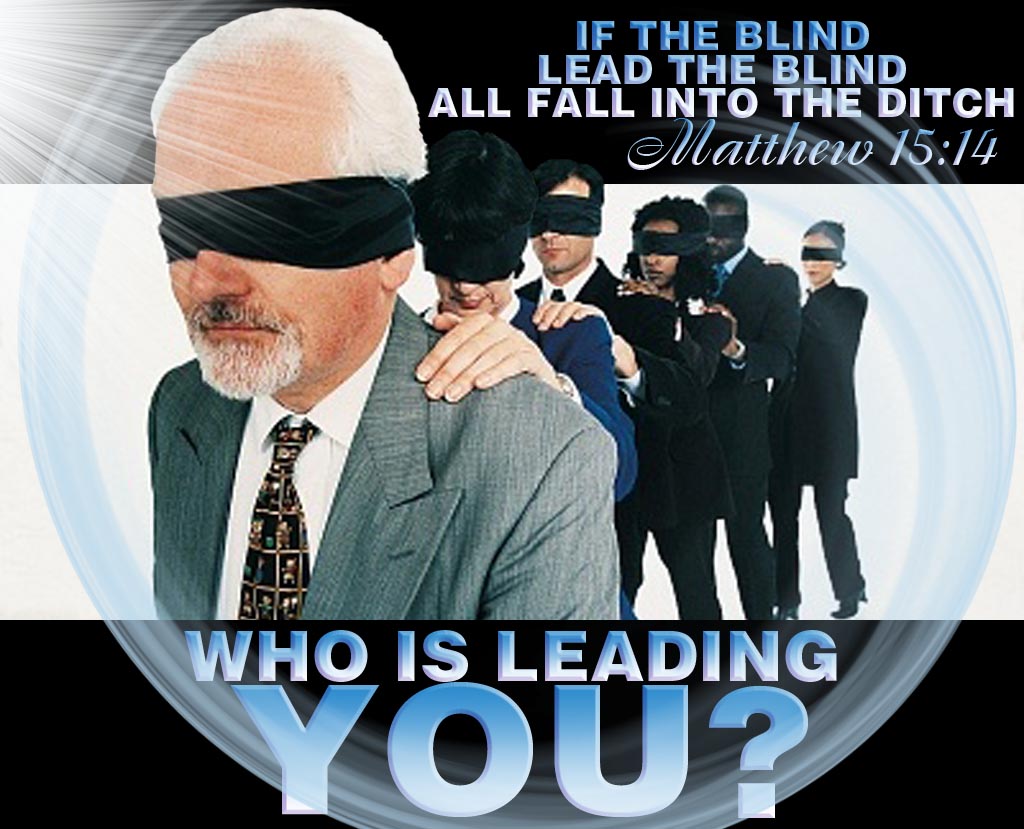
A wink is as good as a nod to the blind, and one church is as good as another to those who are blind to the truth. Jesus built, and is the head of only One Church, with One Faith, and One Baptism, the Church of Christ. However, if your understanding is closed, how will you ever find it? There is none more spiritually blind, as they who will not read, study, and accurately handle the Word of truth.
Mt 16:18; Eph 1:22,23; Col 1:18; Eph 4:4-6; Rom 16:16,17; Isa 34:16; 1 Tim 4:13; 2 Tim 2:15; Mt 13:15; Mt 15:14; 2 Pet 1:5-9; Mk 12:24; Hos 4:6; 2 Thess 2:10-12

What's Wrong With Beauty and the Beast? by Richard Mansel


http://www.oldpaths.com/Archive/Mansel/Richard/Dale/1964/beast.html

What's Wrong With Beauty and the Beast?

Do I wish to criticize the Disney film, Beauty and the Beast? No, I feel it is one of the greatest Disney movies ever made. It is the legend I am concerned about.
My thoughts for this article began germinating recently when I heard a song by Stevie Nicks of the same title. One line in that song characterizes the legend perfectly. She wrote, after describing him as a beast, "My lover is a man that must be tamed." In the fantasy a beautiful, morally pure girl meets a raging, immoral beast of a man. She shows him love and goodness and soon he is "tamed" and becomes a perfect gentleman.
A cursory glance at society sees this attemped in far too many cases. In fact, it lies at the center of many a broken home and heart.
A preacher friend of mine whom I respect very much received a call from a young lady in palpable grief over her wayward husband. She was convinced that divorce was her only hope of finding peace. As she whined about his physical and verbal abuse, his drinking, affairs and refusal to attend worship with her, my friend developed an idea. He asked if her husband had displayed these behaviors before they were wed. As he led her through them, she hesitantly admitted that he had.
He realized two things. First, she wanted to divorce this man for all the same reasons she married him. Second, the best time to get a divorce is before one gets married.
The former may puzzle you. Why did she marry him for these terrible reasons? Surely, she didn't, you say.
Well, I have never met her. However, it is not that difficult to see that throughout history, girls have been drawn to "beasts". How many thousands of stories could we find where girls have left behind the "nice boys" to return to the ones who beat them or led them to get arrested or pregnant or addicted to alcohol and drugs?
A sage has said, "Be careful what you wish for, you may get it."
Fantasies don't exist. We can wish all our lives for our spouse to be otherwise, and die disappointed. Even if we get what we desire, almost never is it what we wished it would have been. USA Today ran a poll a few years back where YM magazine had asked 15,000 girls ages 13-20 about their sexual behavior. Of those who responded, 96% of virgins and 76% of non-virgins said they had to be "in love" with someone before they had sex with them. Not surprisingly, most of those who had had sex, said they were not. In this study over half of those who were sexually active said they were too young. Reality is much more cruel than fantasy.
Satan is the "father of lies" (John 8:44) and yet more people believe him than God, "Who cannot lie" (Titus 1:2). You cannot change a person. That is his responsibility and if he has not done so by adulthood, it is very possible he does not intend to.
God says little about dating in Scripture. However, He is clear that we need to be Christians and marry people of like faith (1 Corinthians 7:39). Amos wrote, "Can two walk together, unless they are agreed?" (3:3). Often, a Christian girl will date a young man who lives a wild life claiming that she can convert him later. A better plan would be to try to convert him BEFORE you get married! Better yet, do not date men that are not Christians and this will never be an issue.
Richard Mansel


Published in The Old Paths Archive
(http://www.oldpaths.com)

One by Gary Rose


Monotheism: The belief that there is one God. Since I believe this is true, then there must be one truth. As a Christian, I believe that truth is solely contained within the pages of the Bible. 

Jesus said...


John 14:6 

ASV
Jesus saith unto him, I am the way, and the truth, and the life: no one cometh unto the Father, but [1] by me.

Darby
Jesus says to him, I am the way, and the truth, and the life. No one comes to the Father unless by me.

GodsWord

Jesus answered him, "I am the way, the truth, and the life. No one goes to the Father except through me.
LITV
Jesus said to him, I am the Way, and the Truth, and the Life. No one comes to the Father except through Me.

LO

Jesus answered, I am the way, and the truth, and the life; no man comes to the Father, but by me.
Rotherham
Jesus saith unto him—I, am the way, and the truth, and the life: No one, cometh unto the Father, but through me.


I just chose five versions, but I could have chosen many, many others. They basically say one thing. Jesus is the one and only way to the Father.
Since this is true, all others are false. Just a simple concept of logic.

Refuse to believe it? Ask yourself this question: Who else died and rose again (for your sins)?

10/19/18

"THE SECOND EPISTLE TO TIMOTHY" The Scriptures Inspired Of God (3:14-17) by Mark Copeland


"THE SECOND EPISTLE TO TIMOTHY"

The Scriptures Inspired Of God (3:14-17)

INTRODUCTION

1. As Paul prepared the Ephesian elders for the time when he would be
   gone...
   a. He commended them to the word of God's grace - cf. Ac 20:29-32a
   b. Which was able to build them up, and give them their inheritance
      - Ac 20:32b

2. With Timothy, Paul did the same when writing his last letter...
   a. He admonished Timothy to continue in the things he had learned
      - 2Ti 3:14
   b. He first referenced the Holy Scriptures known since his childhood
      - 2Ti 3:15
      1) When Timothy was a child, the only scriptures available was the
         Old Testament
      2) So Paul clearly had the Old Testament scriptures in view
   c. He then spoke of the value of "all Scripture" - 2Ti 3:16-17
      1) That which was inspired of God
      2) That which had the ability to make the man of God "complete"

[If both the Ephesian elders and Timothy needed the word of God after
Paul's departure, much more do we today!  To fully appreciate why,
consider what our text (2Ti 3:14-17) reveals about...]

I. THE VALUE OF THE OLD TESTAMENT

   A. IT DEVELOPS WISDOM...
      1. The OT makes one "wise for salvation through faith which is in
         Christ Jesus" - 2Ti 3:15
      2. How?  The OT provides information regarding:
         a. The fall of man and the rise of sin
         b. The background and development of God's scheme of redemption
         c. Messianic prophecies which describe what to expect when He
            comes
      3. One cannot hope to fully understand such books of the New
         Testament like:
         a. Hebrews, without a knowledge of the Levitical priesthood
         b. Revelation, without a familiarity of OT prophecy and
            apocalyptic literature
      -- If one desires to be wise concerning their salvation, study the
         Old Testament!

   B. IT OFFERS HOPE...
      1. Note carefully what Paul wrote in Ro 15:3-4
         a. He appealed to a passage in the OT
         b. The things "written before" (i.e., the OT) were "written for
            our learning"
         c. The OT was written and preserved especially for the
            Christians' benefit!
         d. The OT provides "patience and comfort", that we "might have
            hope"!
      2. How?  The OT provides a record of God's faithfulness, how He
         kept His promises:
         a. To Abraham and the nation of Israel
         b. To judge the wicked and avenge the righteous
         c. To forgive the penitent, and protect the humble
      -- As we read this history of God's dealings with Israel, it gives
         us hope that God will keep His promises to us!

   C. IT PROVIDES ADMONITION...
      1. Consider what Paul wrote in 1Co 10:11
         a. He had just reviewed the fall of Israel in the wilderness
            - 1Co 10:1-10
         b. The events described may have happened to Israel
         c. "They were written for our admonition, upon whom the end of
            the ages has come"
         d. The OT was written and preserved especially for the benefit
            of Christians!
      2. Thus the NT writers often appealed to the OT to admonish
         Christians
         a. As did Paul, writing to the Corinthians
         b. As did the writer of Hebrews, exhorting Christians to remain
            steadfast - He 3:12-19
         c. As did James, encouraging Christians to be patient in their
            suffering - Jm 5:7-11
         d. As did Peter, warning of false teachers and scoffers - 2 Pe  2:3
      -- As we read the Old Testament, we should learn from what
         happened to Israel!

[Though we do not live under the Old Covenant, the Old Testament is of
great value to the Christian.  Together with all Scripture from God, it
provides every thing we need.  Indeed, Paul reveals...]

II. THE ALL-SUFFICIENCY OF THE SCRIPTURES

   A. THEY ARE INSPIRED...
      1. All Scripture is "given by the inspiration of God" (NKJV)
         - 2Ti 3:16
         a. Literally, "God breathed" (theopneustos)
         b. Cf. "All Scripture is breathed out by God" (ESV)
      2. "The idea of 'breathing upon, or breathing into the soul,' is
         that which the word naturally conveys." - Barnes
      3. The writers of Scripture were moved along by the Spirit of God
         - cf. 2Pe 1:21
      4. The Spirit gave them their very words (i.e., verbal and plenary
         inspiration) - cf. 1Co 2:13
      -- The Scriptures are not the words or thoughts of mere men, but
         of Spirit-guided men who spoke and wrote the very Word of God!
         - cf. Jn 16:13; 1Co 14:37; 1Th 2:13

   B. THEY ARE PROFITABLE...
      1. For doctrine - 2Ti 3:16
         a. Teaching, instruction - Thayer
         b. Regarding all that God wants us to know regarding Himself
            and His will for us
      2. For reproof - 2Ti 3:16
         a. Proof, conviction - Strong
         b. Convicting those in error of their wrong, showing them the
            need to change
      3. For correction - 2Ti 3:16
         a. Correction, improvement of life or character - Thayer
         b. "the Scriptures are a powerful means of reformation, or of
            putting men into the proper condition in regard to morals."
            - Barnes
      4. For instruction in righteousness - 2Ti 3:16
         a. "Instruction in regard to the principles of justice, or what
            is right." - Barnes
         b. "Man needs not only to be made acquainted with truth, to be
            convinced of his error, and to be reformed; but he needs to
            be taught what is right, or what is required of him, in
            order that he may lead a holy life." - ibid.
      -- The Scriptures are truly "profitable" (helpful, advantageous),
         as extolled by David - cf. Ps 19:7-11

   C. THEY MAKE ONE COMPLETE...
      1. Thoroughly equipped for every good work - 2Ti 3:17
         a. That is, completely furnished to do what is expected of him
         b. Note well:  equipped for every good work; not some, but all
            that God considers a good work
      2. Regarding life and godliness - cf. 2Pe 1:3
         a. We have been given "all things that pertain to life and
            godliness"
         b. Not 'some' things, but 'all' that we need for spiritual life
            and godly living
      3. Having been given once for all - cf. Jude 3
         a. The faith has been delivered "once for all" to the saints
         b. There is no need for 'modern day revelations', just as there
            is no more need of sacrifices for sins - cf. He 9:26-28;
            1Pe 3:18
      -- The inspired Scriptures alone are more than adequate to make
         the man of God "complete" (competent, ESV), to do everything
         God desires of Him for salvation

CONCLUSION

1. Dear friends and brethren, do we truly desire to...
   a. Be wise concerning the salvation by faith in Christ?
   b. Have hope in the promises of God?
   c. Learn from the mistakes of those in the past?
   d. Be complete, thoroughly equipped for every good work?

2. Then take up the admonition of Paul to both the elders and the young
   preacher...
   a. Continue in the things learned from the Holy Scriptures!
   b. Let the inspired Scriptures be your guide in life through its
      doctrine, reproof, correction, and instruction in righteousness!

3. Give yourself to diligent study of the Word of God, which is...
   a. "able to make you wise for salvation through faith which is in
      Christ Jesus"
   b. "able to build you up and give you an inheritance among all those
      who are sanctified"

   "For this reason we also thank God without ceasing, because when
   you received the word of God which you heard from us, you welcomed
   it not as the word of men, but as it is in truth, the word of God,
   which also effectively works in you who believe.'  (1Th 2:13)

Could Paul have written the same about us...?

Executable Outlines, Copyright © Mark A. Copeland, 2016

eXTReMe Tracker 

Rob Bell and Eternal Hell by Kyle Butt, M.Div.

http://apologeticspress.org/APContent.aspx?category=11&article=13


Rob Bell and Eternal Hell

by Kyle Butt, M.Div.


For several years, Rob Bell, the minister of the Mars Hill Bible Church has been mulling over the idea of hell. In his latest book, Love Wins: A Book about Heaven, Hell, and the Fate of Every Person Who Ever Lived, Bell contends that the “traditional” view of hell, in which those who do not believe in Christ are lost, is ill-conceived and needs re-working. Jon Meacham, column writer for TIME magazine, noted that Rob Bell “suggests that the redemptive work of Jesus may be universal—meaning that, as his book’s subtitle puts it, ‘every person who ever lived’ could have a place in heaven, whatever that turns out to be” (2011). In essence, Rob Bell is little more than a recent advocate of a modified version of universalism.
The trend to minimize hell in our emotionally-driven, sentimental society is nothing new. Behind this teaching is the idea that love and eternal punishment are incompatible and mutually exclusive. The atheistic community has repeatedly challenged belief in the God of the Bible, due to the alleged moral dilemma presented by a God of love and eternal punishment (Butt, 2010, pp. 217-227).
A critical analysis of the situation brings to light a number of truths. First, it is clear that the Bible teaches that hell is a reality and will be eternal (Matthew 25:46, see Lyons and Butt, 2005a). Second, the concept of hell has been shown to be in perfect harmony with the concepts of morality and justice (Lyons and Butt, 2005b). Third, the erroneous teachings of universalism and the limited duration of hell are nothing new, and advocates of these beliefs will most likely continue to present themselves (see Colley, 2007; Butt, 2004; Miller, 2003).
The apostle Peter explained that one responsibility given to Christians is that they ought always to be ready to give a defense of their beliefs (1 Peter 3:15). One of those beliefs that is continually challenged is the idea of an eternal hell to which those who have not obeyed God will be consigned forever. Let us all be aware of these challenges to the Bible’s teachings and prepare ourselves to respond to them, holding fast to the faithful Word of God.

REFERENCES

Butt, Kyle (2004), “The Reality of Eternal Hell,” Apologetics Press, http://apologeticspress.org/APContent.aspx?category=11&art2004icle=819.
Butt, Kyle (2010), A Christian’s Guide to Refuting Modern Atheism (Montgomery, AL: Apologetics Press).
Colley, Caleb (2007), “Controversy About Hell Continues,” Apologetics Press, http://apologeticspress.org/APContent.aspx?category=11&article=2262.
Lyons, Eric and Kyle Butt (2005a), “The Eternality of Hell, Part 1,” Apologetics Press, http://apologeticspress.org/apcontent.aspx?category=11&article=1474.
Lyons, Eric and Kyle Butt (2005b), “The Eternality of Hell, Part 2,” Apologetics Press, http://apologeticspress.org/apcontent.aspx?category=11&article=1475.
Meacham, Jon (2011), “Is Hell Dead?” TIME, April 14, http://www.time.com/time/nation/article/0,8599,2065080,00.html?xid=feed-yahoo-full-mostpopular.
Miller, Dave (2003), “Who Believes in Hell Anymore?” Apologetics Press, https://apologeticspress.org/apcontent.aspx?category=11&article=1204.